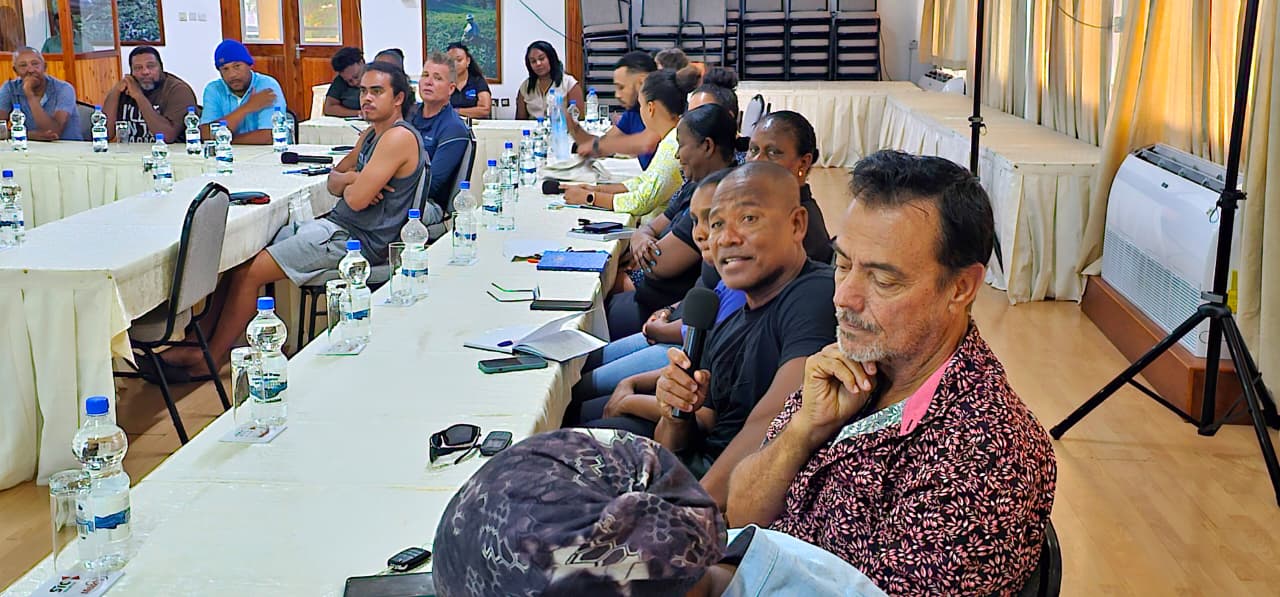
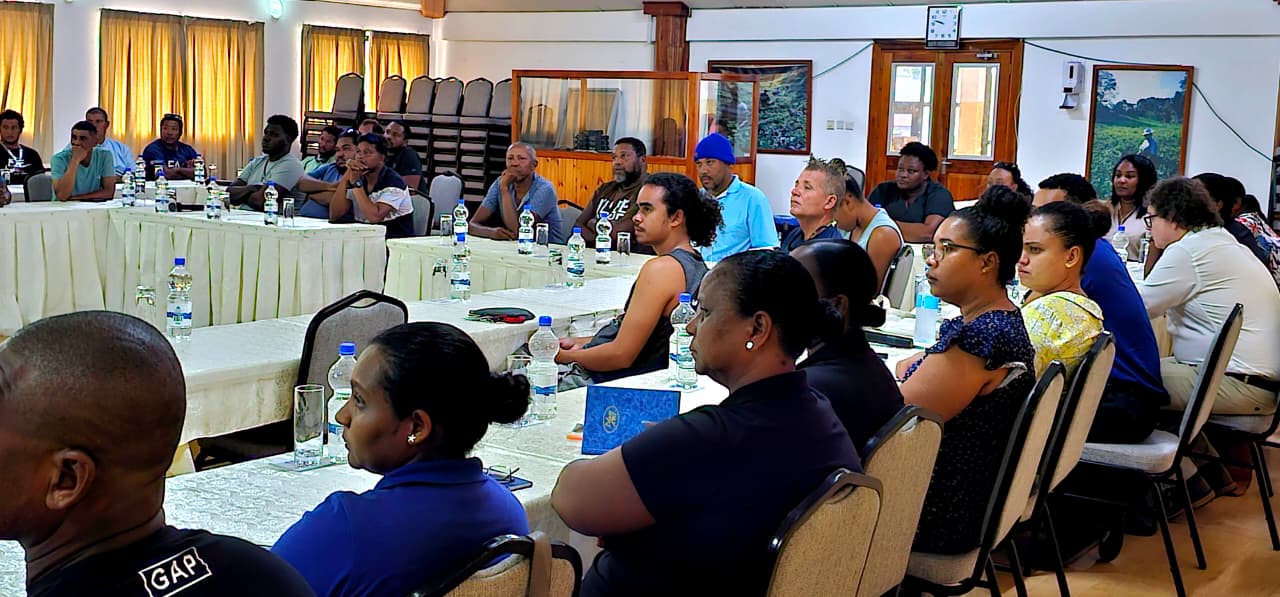
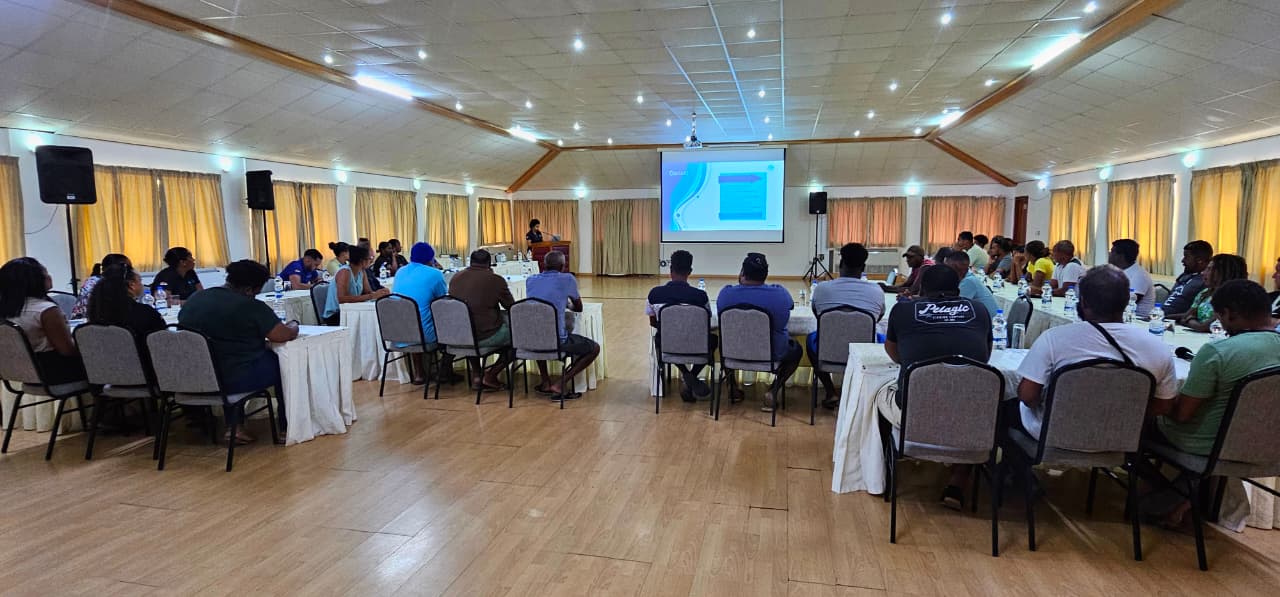
The Monitoring, Control, and Surveillance (MCS) Department recently conducted a series of stakeholder consultations across Mahé, Praslin, and La Digue to introduce and discuss a new licensing framework for the commercial octopus fishery. These meetings were open to all individuals involved in the harvesting, buying, and selling of octopus, and aimed to foster open dialogue, gather feedback, and raise awareness about the proposed changes.
During the consultations, the SFA presented key elements of the framework, including the introduction of licenses for fishers and vessel owners, size and weight limits for octopus, a seasonal closure period from March to April, and the designation of specific fishing zones. Participants also discussed the importance of limiting vessel size to support octopus migration, banning harmful fishing practices such as the use of chemicals, and implementing standard sales receipts to improve traceability.
Notably, the fishers collectively agreed on a single licensing framework to be implemented and introduced the idea of applying sales receipts for all octopus transactions—an initiative that was not originally proposed by SFA but which was welcomed and incorporated into the final framework.
Additional proposals included increasing taxes on imported octopus to promote local catch, strengthening monitoring and enforcement, and enhancing outreach to ensure fishers fully understand the new requirements. Special attention was given to the concerns of part-time fishers and the need for practices that minimize coral reef damage.
The framework, which took effect on 31st March 2025, is being implemented in phases, with ongoing consultation and education efforts to support a smooth and inclusive transition toward sustainable octopus fishing in Seychelles.