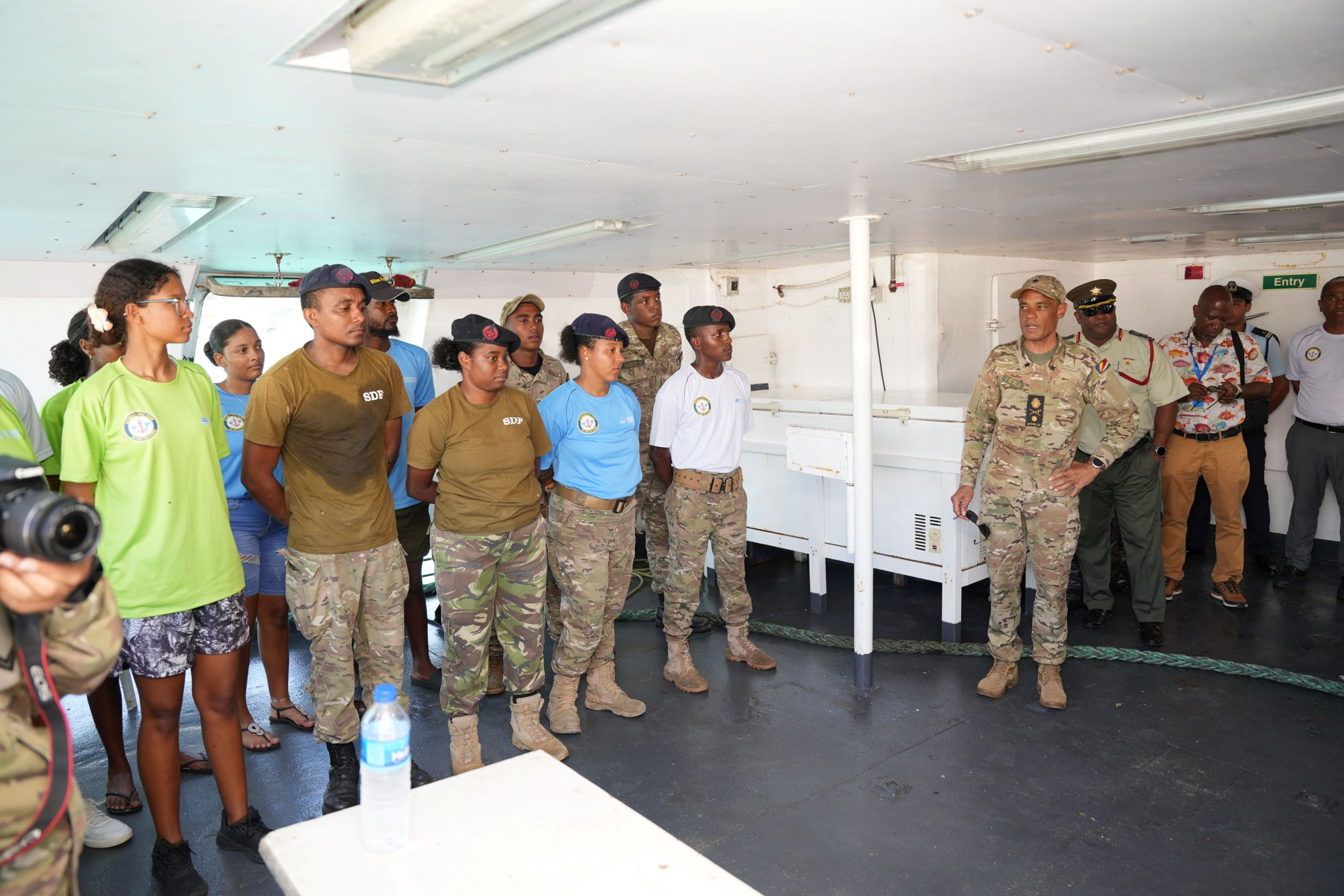
 The third mission of the FAD Watch project has been completed very successfully. From 10th March to 2nd April 2026, the Seychelles Coast Guard Vessel (SCGV) Saya de Malha, under the direction of the Seychelles Fisheries Authority (SFA), participated in a mission to recover drifting fish aggregation devices (dFADs).
As for previous missions, the main aim was to collect any dFAD-related material that may have found its way onto any of the monitored islands. The third mission also incorporated beach cleaning to remove any plastics or other debris.
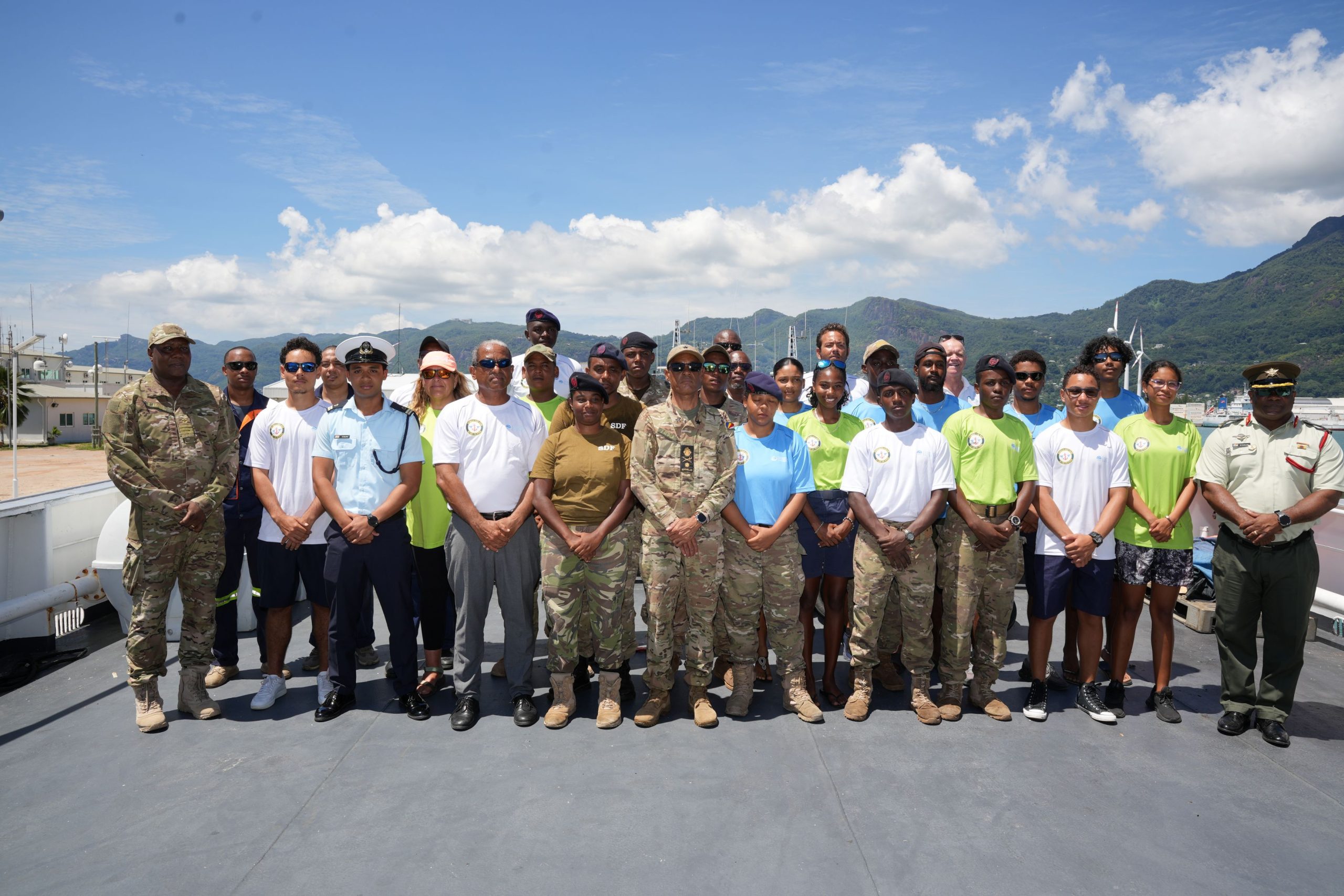
SFA technicians, scientists, and students from the Seychelles Maritime Academy (SMA) participated alongside Seychelles Coast Guard personnel.
The vessel visited 12 islands, including Aldabra and most of the Amirante islands. Island assessments were conducted by landing search and clean-up teams on the islands, as well as the Coast Guard team, collecting dFADs stranded in areas close to shore. dFADs were also collected when found in close proximity to the islands, done to reduce the potential of stranding occurring later. The mission was conducted during the inter-monsoon season to allow for safe access to the islands by the tenders from SCGV Saya de Malha.
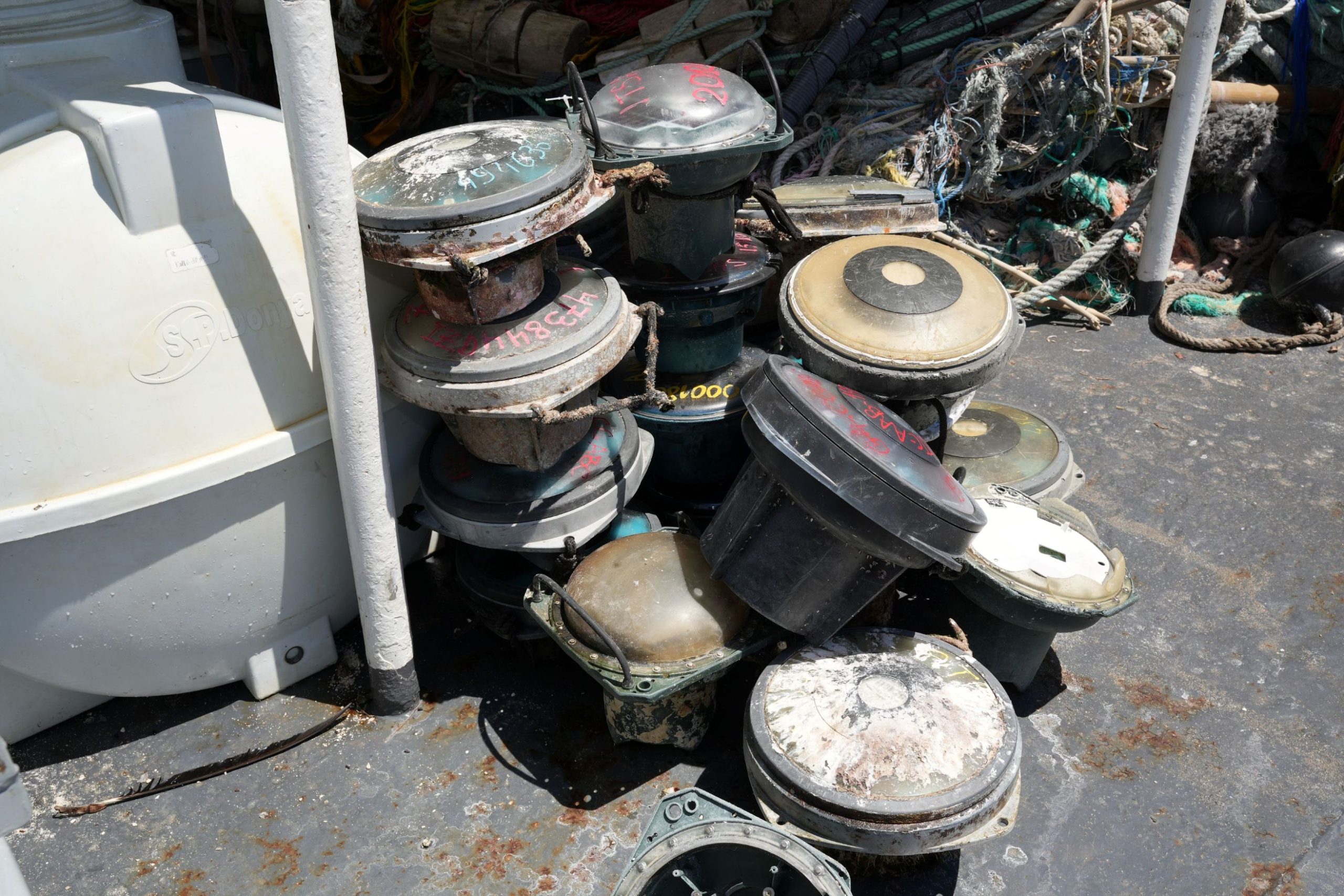
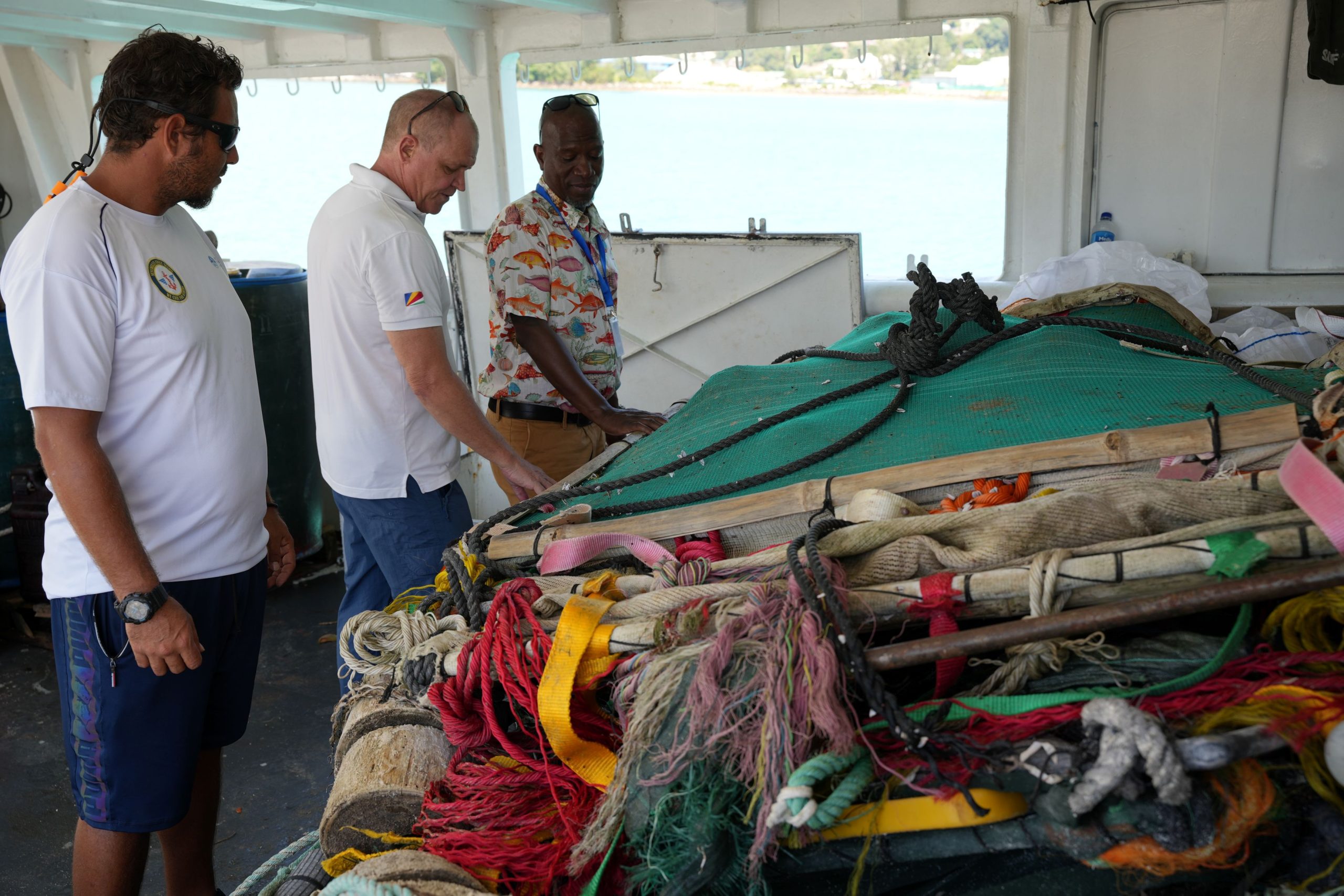
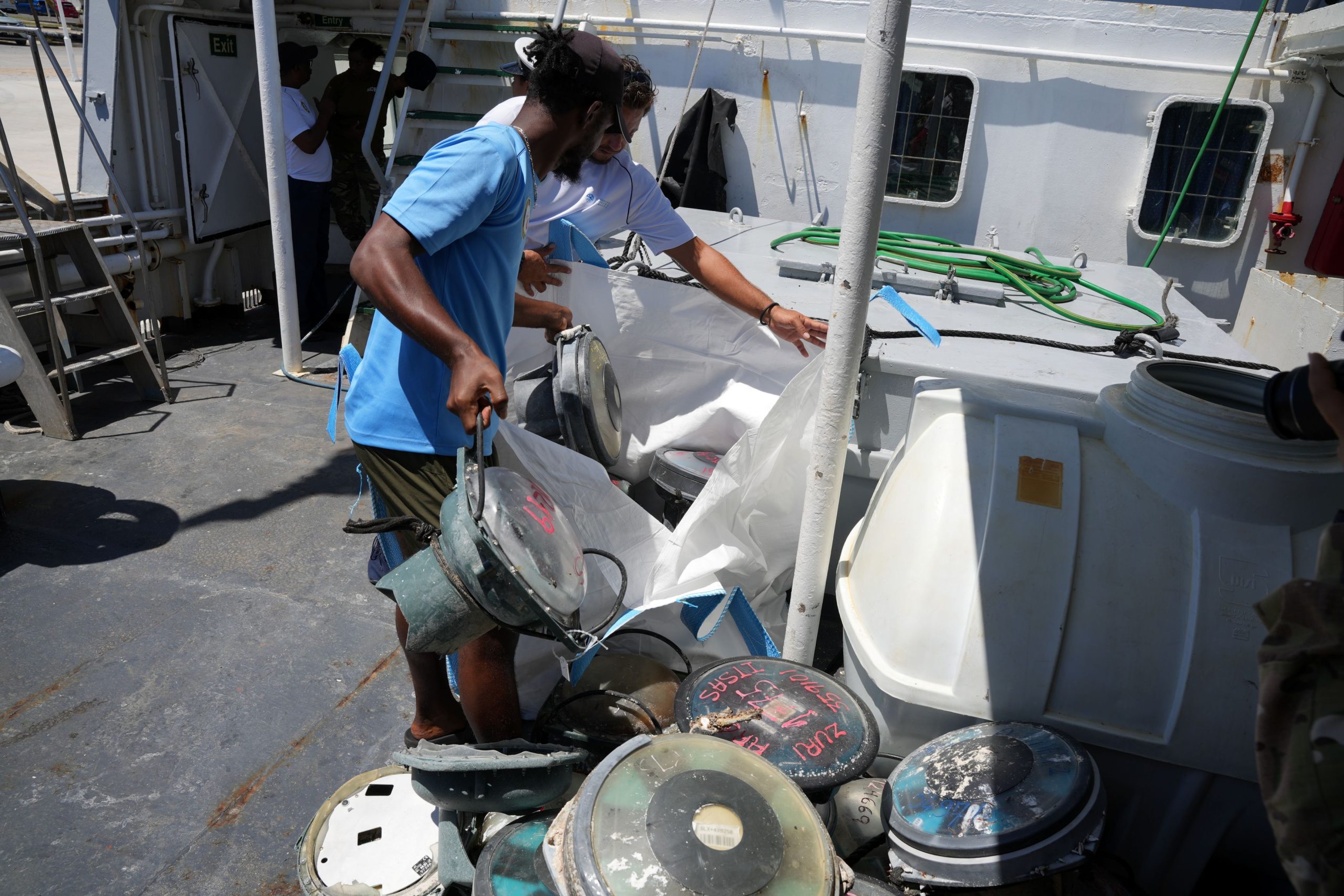
The current mission collected over 120 items of dFAD parts and associated material, together with over 45 sacks (around 500 kgs) of waste found washed up on the islands during beach clean-ups. The collected dFAD elements and waste were returned to Mahe for appropriate disposal, storage, and recycling.
The tuna purse seine fishery operating in the Western Indian Ocean, encompassing Seychelles’ exclusive economic zone (EEZ), uses drifting dFADs as a vital part of the fishing strategy. The dFADs are free-floating structures that are tracked by satellite, and their primary function is to attract tunas and thus enable more efficient operations.
dFAD use, on an increased scale, in the Western Indian Ocean has been occurring since the early 2000s and is also the predominant method of tuna fishing in all the other major oceans.
Over the years, some dFADs have been washed ashore during their passage through the EEZ. Concerns have been raised in the past by local fishers as well as some environmental monitoring organisations, both local and international. This prompted the development of the FADWatch project.
The FADWatch initiative also aims to help the Seychelles put into place a comprehensive monitoring and management programme for dFADs deployed by the industrial fishery and drifting through our waters.
The SFA, with the support of the Sustainable Indian Ocean Tuna Initiative (SIOTI), comprising European processors and fleets, and with the support of the Association of Large Tuna Freezers (AGAC), has been given access to an advanced dFAD tracking software suite. This allows the tracking of any dFADs that may have become stranded, mainly on the outer islands. A total of fifteen island groups is monitored through the software, with more islands, including Aldabra, to be incorporated into the tracking system later this year.
During the mission, assistance was kindly provided on various islands by staff of the Island Development Corporation and the Island Conservation Society.
Further missions of this type are being planned for 2026, and continued engagement with local island environmental groups and NGOs will be reinforced.